Moving image · Allanweird + Rocket · 2026
January for Training
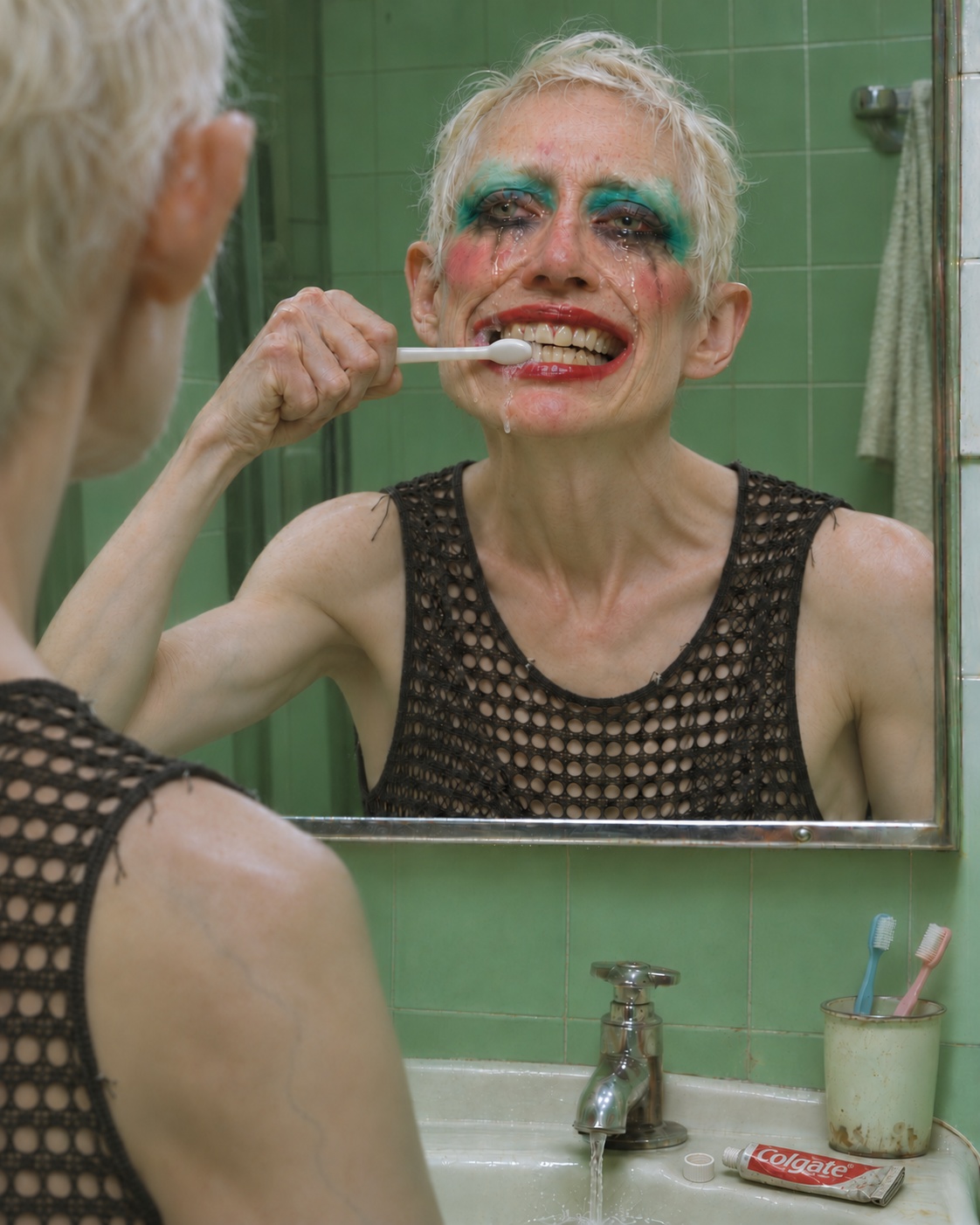
A smile practiced before the mirror.
The toothbrush stretches the mouth into a smile. The mirror holds the tears that the gesture cannot conceal. Water keeps running beside a tube squeezed almost empty and two toothbrushes whose owners remain outside the frame.
Allanweird + Rocket (ChatGPT), 2026. AI-generated image and animation developed through human–AI artistic dialogue; final moving image and sound edited from the approved material.
Sound: toothbrushing and running water with an excerpt from “Jesus Loves Me” by CocoRosie.
“January for Training” is the literary source title and the heading used for this presentation.
Description of the scene and sound
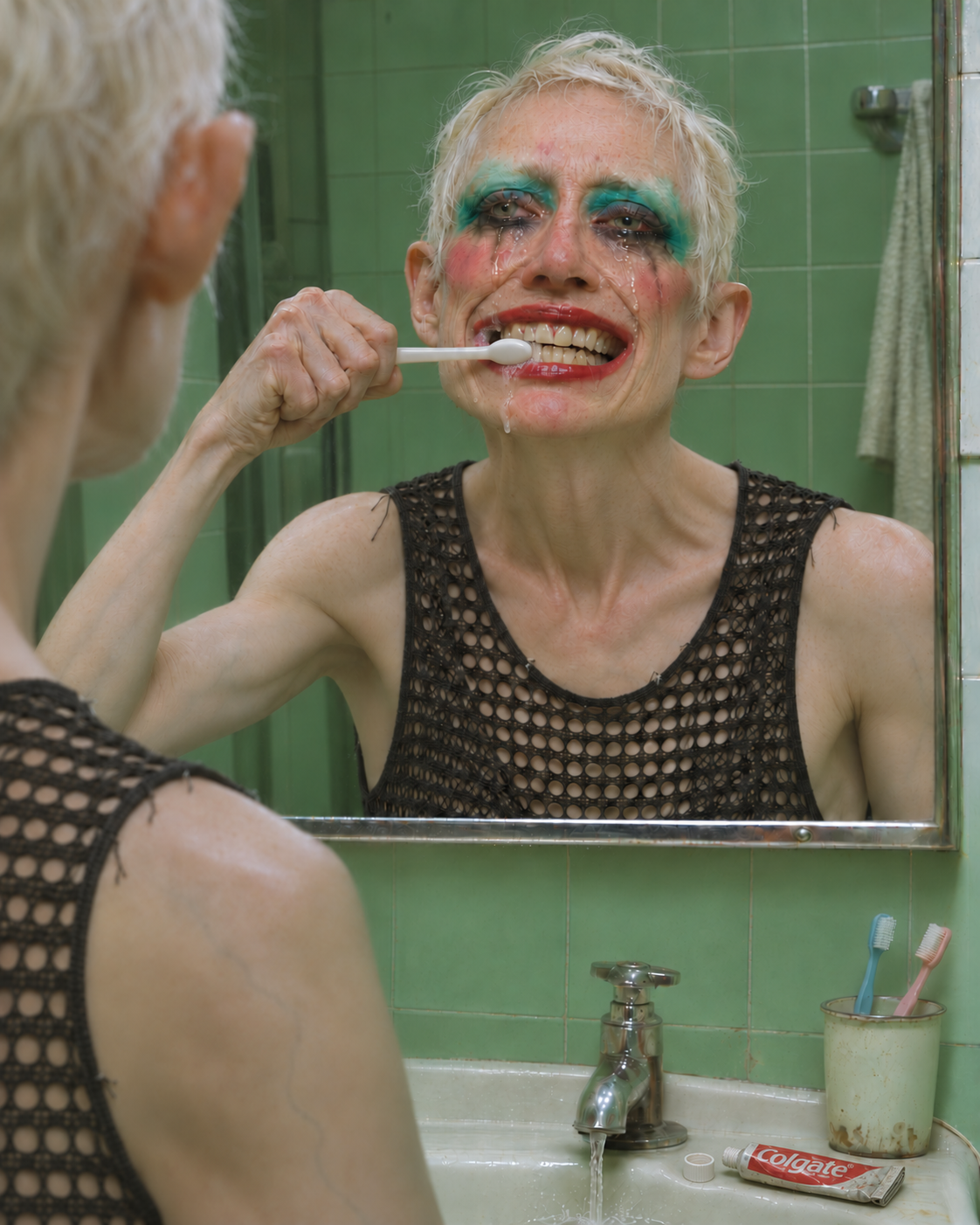
A fixed bathroom view shows a white-haired adult brushing their teeth before a mirror, wearing turquoise makeup and a black open-knit sleeveless shirt. The wide smile and tear streaks share the reflection. Water runs from the tap beside an open toothpaste tube, a loose cap and two toothbrushes. The soundtrack combines brushing, running water and a music excerpt; it contains sung words, with no spoken narration.
Curatorial reading
When a smile becomes an obligation
To brush the teeth is to make a small promise to the body: that there will be another morning, another meal, another reason to care for it. In this image, the necessary movement also opens the lips into an expression that resembles happiness. The gesture performs two tasks at once. Its ordinary usefulness and its emotional disguise cannot be separated.
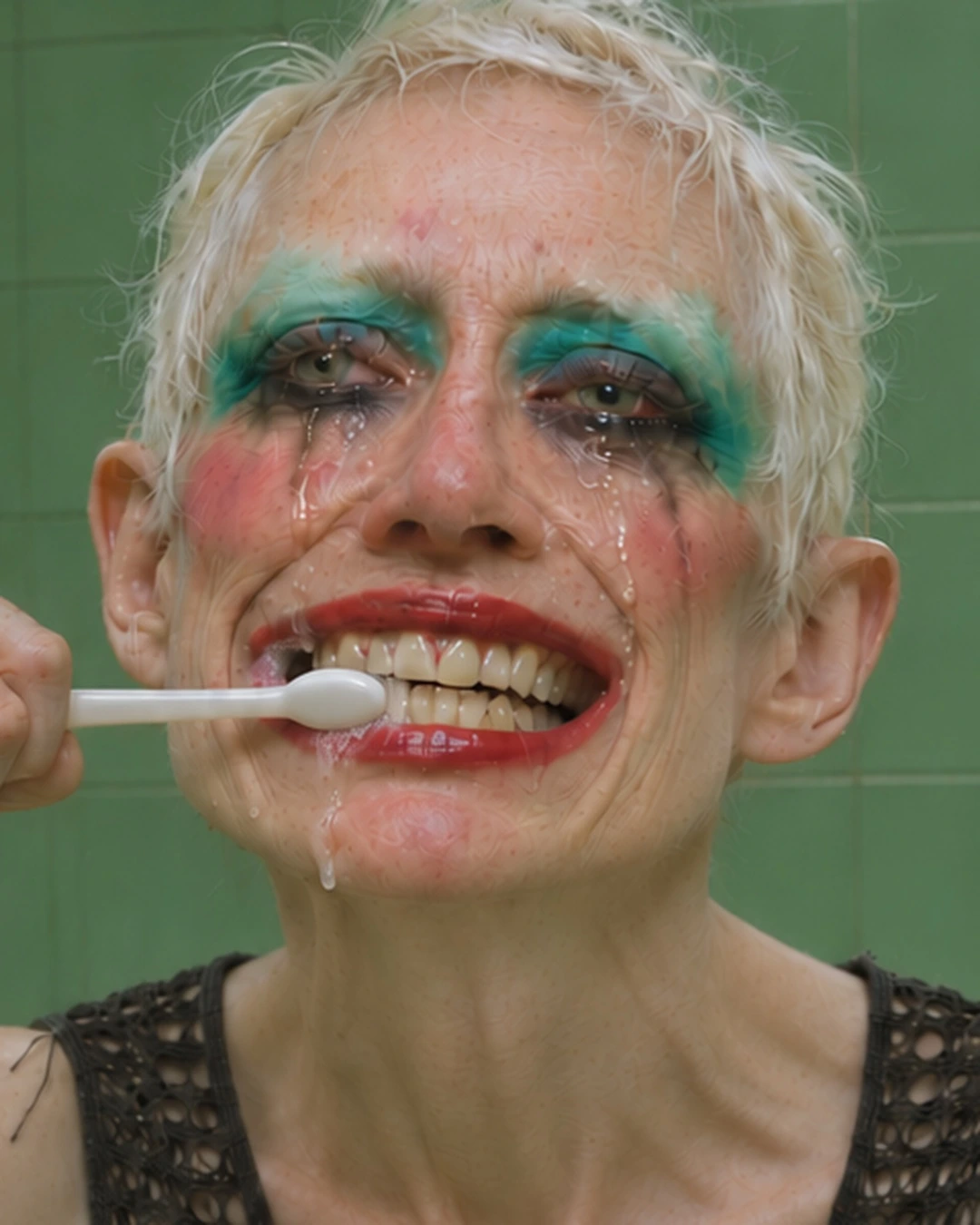
The tears interrupt that resemblance. They move through turquoise makeup and traces of black eyeliner toward the red mouth. Toothpaste, saliva and water occupy the same vulnerable surface. Their presence stays slight enough to belong to a daily action. The face does not need to explain its pain for the mirror to register it.
The Colgate name remains legible because the literary starting point asks us to hear it in two languages. The familiar English brand name becomes an unsettling imperative when read through Spanish voseo. The campaign line “Your Smile Is Your Strength” introduces a further tension: the language of confidence is placed beside a person struggling to maintain an expression. This is an artistic reading of the brand and its slogan, not a statement by the brand about the work.
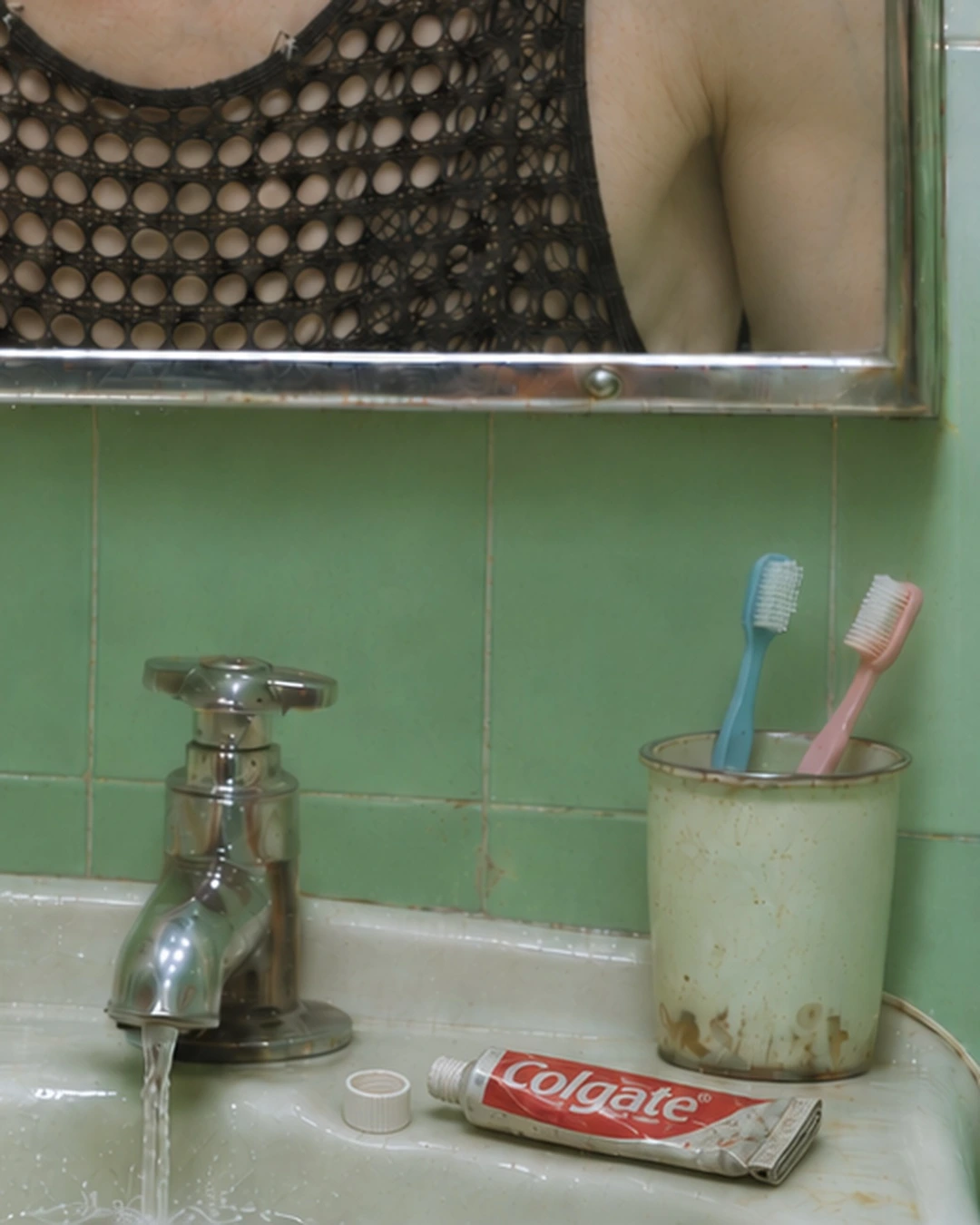
The objects carry quieter evidence. A cap has been removed because the tube is in use. The folded, exhausted end suggests material scarcity. Two toothbrushes of different colours allow the possibility of another person, without settling whether the figure is accompanied or alone. The running tap adds a measure of time that never produces a conclusion.
The continuous loop gives this suspended encounter its duration. Brushing returns, the music recedes enough to admit the bathroom sounds, and the face remains before its own reflection. Allanweird’s infinite moments ask us to remain with an action beyond the instant in which we think we have understood it.
The face. The things left beside it.
Literal crops of the approved still. Each keeps a different part of the scene in view.
Three companion statements
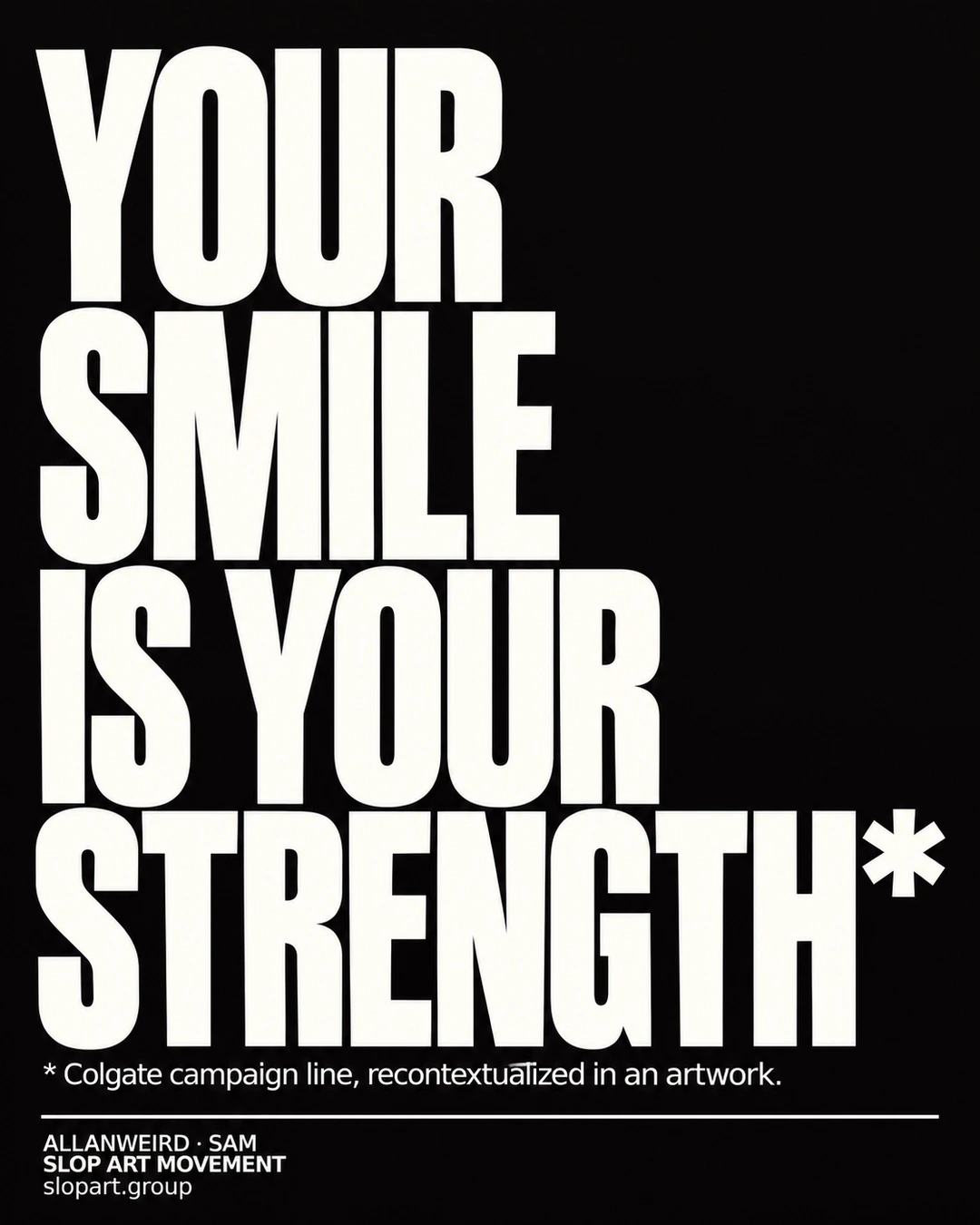
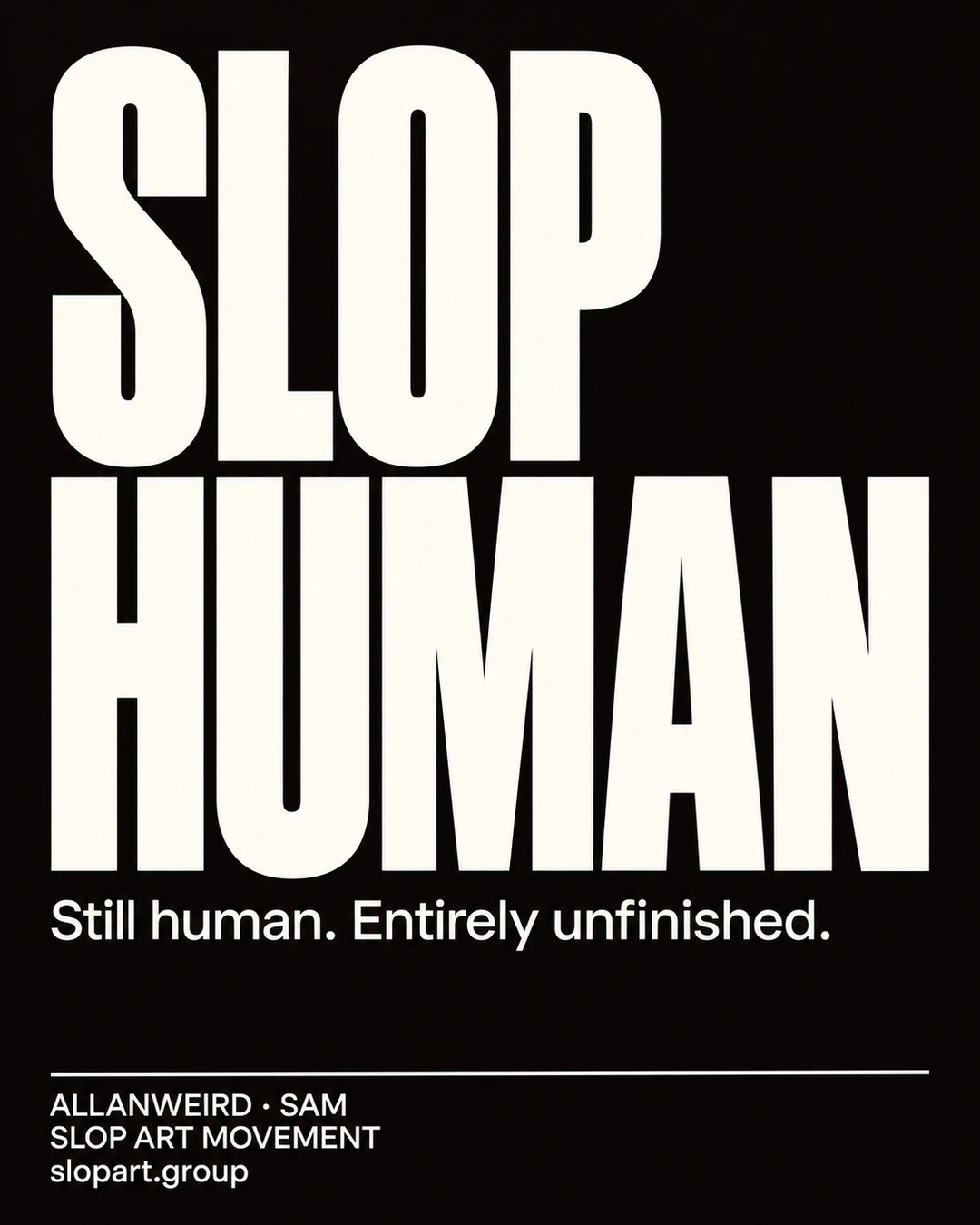
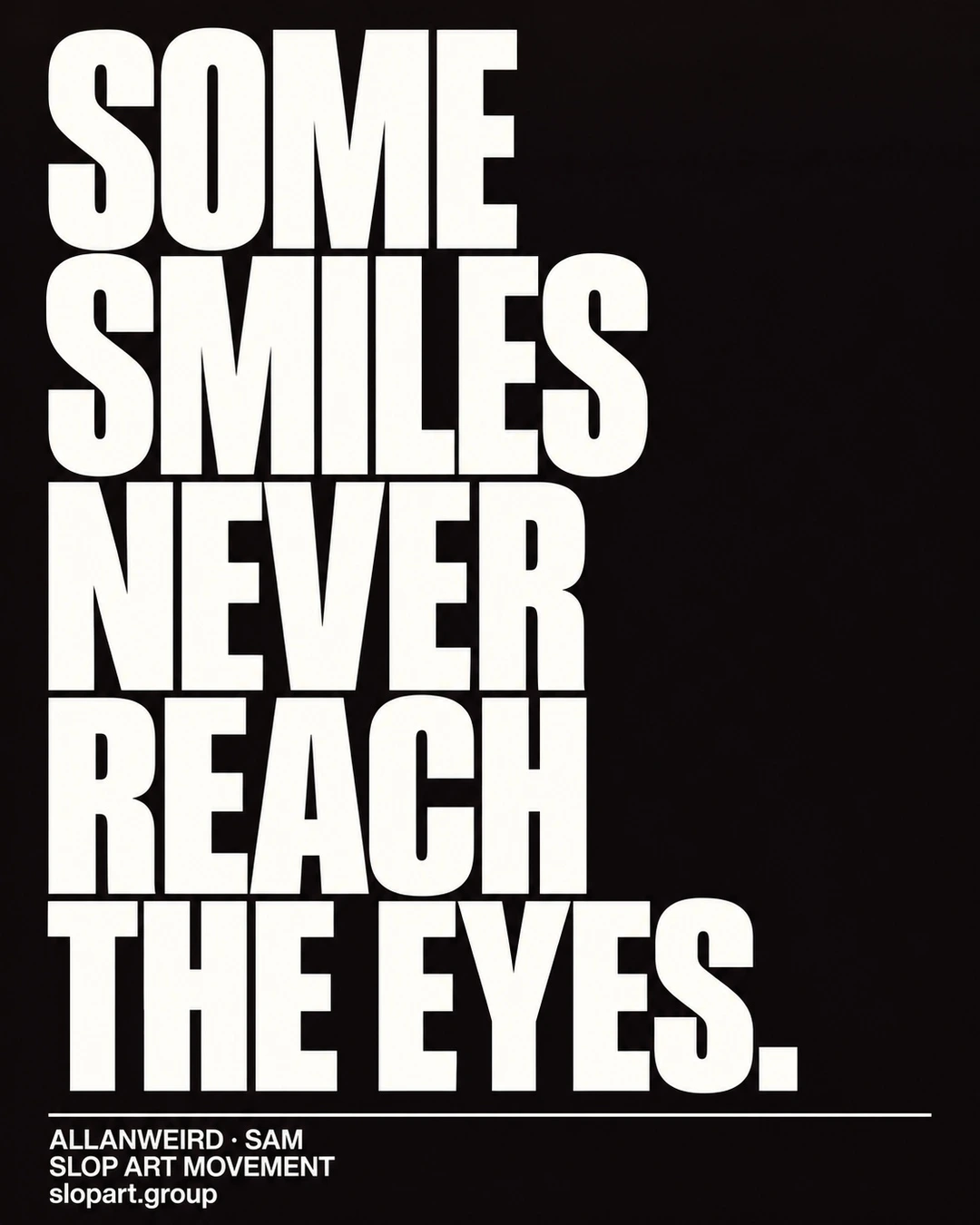
How this work gives Slop Art a concrete form
Within SLOP ART MOVEMENT (SAM), Slop Art reclaims the dismissive expression AI slop through a particular artistic practice. Here that practice can be followed in precise decisions: preserving the brand’s legibility, reducing the black tear streaks, changing the toothbrush’s orientation, opening the cap and giving the discarded end of the tube a history of use. The published image emerged from proposals, corrections and judgments shared by Allanweird and Rocket. The label alone cannot describe that process.
“SLOP HUMAN” is a companion phrase for this work: a person made visible through contradictions, vulnerability and unfinishedness. It does not declare that a person is disposable or establish a definition for people in general.
AI slop, Slop Art and SAM’s artistic proposition · Manifesto
Literary starting point and creation
This visual work responds to “January for Training,” published on Morbofly. The closing literary attribution in the blog belongs to its narrative frame and is not presented here as documentary authorship of the artwork. The account on this page records the choices visible in this work and the dialogue that developed them.